
Parking attendants have been the backbone of parking operations for decades, directing traffic, collecting cash, and helping guests find parking spots.
But hiring, scheduling, and managing attendants creates headaches that eat into your revenue and complicate your parking lot operations.
Modern parking software eliminates the need for full-time parking attendants while delivering better experiences for guests and customers.
The Real Cost of Relying on Parking Attendants
Labor Expenses Add Up Fast
Full-time and part-time attendants create significant ongoing costs:
- Salaries, benefits, and workers’ compensation insurance
- Premium pay for peak hours and weekends requiring extra help
- Cash handling security measures and accounting complications
- Payroll processing and management overhead
According to the U.S. Bureau of Labor Statistics, when you factor in all these expenses, the true cost of parking attendants far exceeds their base wages.
Scheduling Creates Constant Problems
Finding reliable individuals for evening shifts and weekends proves difficult in today’s labor market. The challenges include:
- Evening and weekend shifts that go unfilled
- Last-minute event schedule changes requiring immediate staffing
- Premium rates for short-notice coverage
- Inconsistent customer service across different shifts
These scheduling headaches consume management time that could be spent improving operations.
Training and Turnover Drain Resources
Students and part-time workers typically move on after short periods of time, creating a revolving door of new hires. Each replacement requires:
- Training on parking rules and facility-specific procedures
- Cash handling protocols and security measures
- Customer service standards and conflict resolution
- Time to reach full productivity levels
- Ongoing educational programs for skill development
This constant turnover means you’re perpetually investing resources in replacements instead of improving your parking operations.
Human Limitations Impact Operations
Even the most dedicated attendant faces inherent limitations:
- Can’t monitor multiple areas of a parking garage simultaneously
- Manual tracking leads to errors in parking space availability
- Inconsistent directions based on individual knowledge
- Varying customer service quality across different attendants
- Physical limitations during busy periods and peak traffic
These human constraints create frustration for both guests and property managers trying to deliver consistent experiences.
What Modern Parking Operations Actually Need
Property owners are discovering that parking management doesn’t require attendants stationed at entry points when you have the right software in place. The parking industry has evolved significantly, with the shift toward automation addressing core challenges of attendant-based systems while improving the overall parking experience.
Automated Vehicle Recognition
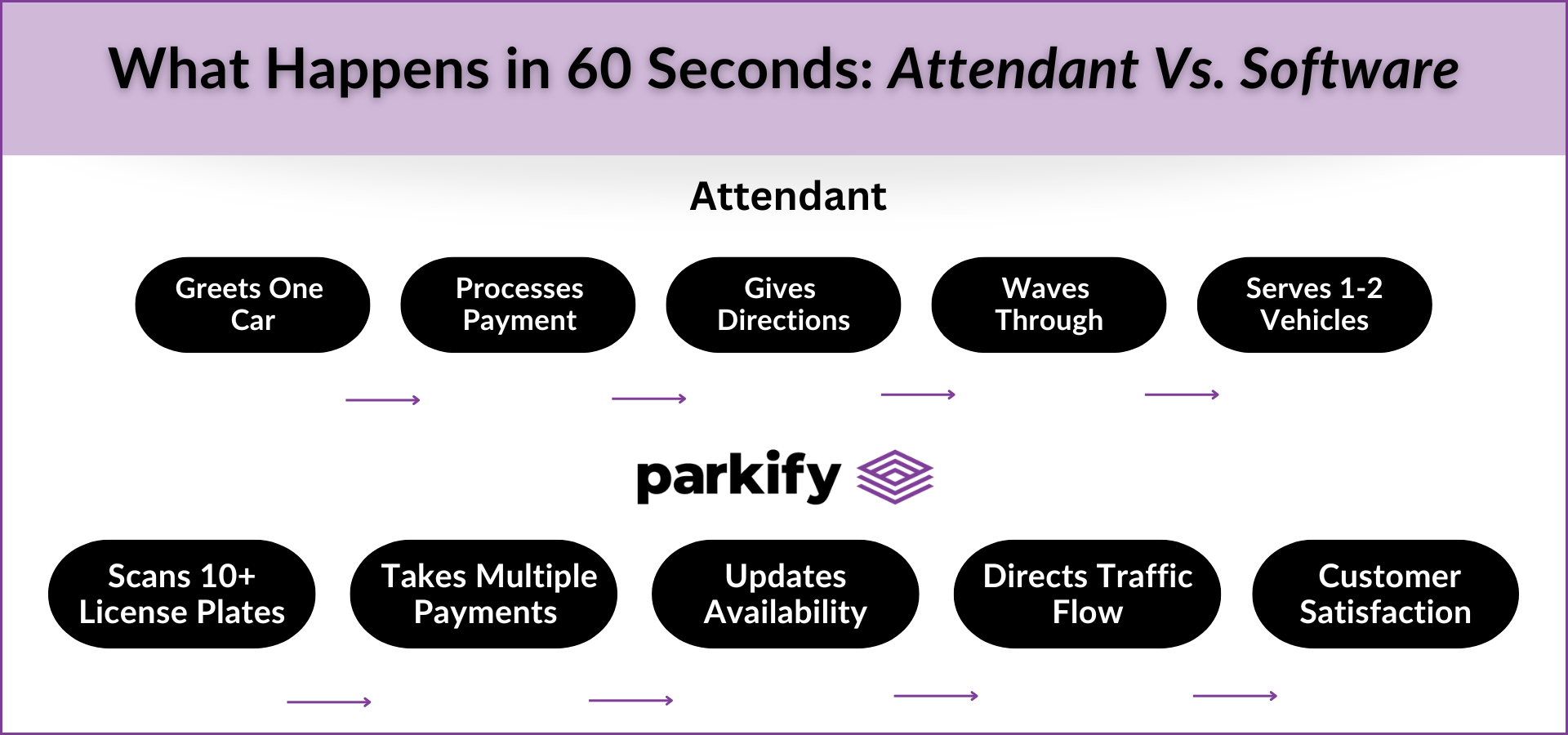
License plate recognition cameras track every vehicle entering and exiting automatically, eliminating the need for an attendant to park vehicles or validate entries. These systems operate 24/7 without breaks, shift changes, or the inconsistencies that come with human management. The technology captures and processes vehicle information faster and more accurately than any attendant could manage manually.
Self-Service Payment Options
QR code scanning lets guests pay instantly without waiting for an attendant to process their transaction. Multiple payment methods process automatically through integrated systems, removing the need for cash handling or attendant interaction for customer payments. This streamlined approach reduces wait times and eliminates the security concerns associated with on-site cash management.
AI-Powered Traffic Control
Software manages traffic flow through parking lots and garages without human direction, using real-time monitoring to identify available parking spots and guide guests efficiently. AI-powered systems adjust to changing conditions faster than any attendant could react, optimizing space utilization throughout the day and responding instantly to shifts in demand.
Enforcement Without Patrols
AI monitoring identifies violations and unauthorized parking automatically, removing the need for attendants to patrol the car park manually. Digital permits validate instantly without attendant verification, and the system sends alerts for issues requiring attention without constant manual oversight. This proactive enforcement approach catches problems faster than periodic attendant patrols ever could.
What Property Owners Gain by Eliminating Attendant Dependency
Predictable Operating Costs
A software subscription replaces variable labor expenses with a single predictable cost:
- No overtime, benefits, or workers’ compensation insurance
- No seasonal staffing fluctuations or labor shortages
- No cash handling security expenses
- Accurate budget forecasting for parking operations
This cost predictability makes financial planning significantly easier for property managers.
Consistent Guest Satisfaction
Every customer receives the same parking experience regardless of time of day or staffing levels. There’s no variation based on which attendant is working or their mood that day, and the system provides clear directions and instructions without confusion. This consistency builds trust with regular customers and clients while ensuring first-time guests have positive experiences.
Scalability for Events and Peak Times
Software handles high-volume periods without additional staffing costs or coordination headaches. Event schedules don’t require hiring extra help or adjusting shift coverage, and campus parking during rush periods manages automatically without traffic control personnel. This scalability proves especially valuable for facilities hosting occasional events that would otherwise require significant temporary staffing.
Operational Flexibility
You can adjust parking rules, rates, and access instantly through a centralized dashboard without needing to brief attendants on changes or print new instructions. System updates apply immediately across all parking spots and entry points, ensuring consistency. This flexibility allows you to respond quickly to changing needs or test new pricing strategies without the communication challenges inherent in managing attendants.
Addressing Common Concerns About Going Attendant-Free
“But What About Customer Service?”
Modern software provides better customer service than attendants through instant digital support that’s available 24/7. Clear automated directions eliminate confusion that attendants often create through inconsistent explanations, and guests appreciate not waiting for attendant availability or dealing with varying service quality. The reality is that today’s customers prefer efficient self-service over forced interaction with parking staff.
“What If Technical Issues Occur?”
Cloud-based systems include 24/7 monitoring and support without requiring on-site personnel to troubleshoot problems. Remote support teams resolve most issues faster than attendant intervention could, often fixing problems before customers even notice them. Backup systems ensure parking operations continue even during maintenance, providing more reliability than attendant-based operations that stop when staff call in sick.
“Don’t Some Guests Prefer Human Interaction?”
Studies show customers prefer self-service parking when systems are intuitive and efficient, especially among younger demographics who expect automated experiences. Guests value speed and convenience over interaction with parking staff, particularly during routine transactions. The few individuals who need additional assistance can access digital support channels that provide more detailed help than on-site attendants typically offer.
The Transition from Attendant-Based to Automated Operations
Phase 1: Assessment
Start by calculating current attendant costs including wages, benefits, and cash handling security expenses. Identify tasks attendants perform that modern software handles automatically, and review peak periods requiring extra help along with associated expenses. This assessment typically reveals that total attendant costs far exceed initial estimates.
Phase 2: Implementation
Install license plate recognition cameras at entry and exit points while deploying digital signage that replaces attendant directions and instructions. Configure software rules to match your parking lot or garage requirements, ensuring the system handles your specific operational needs. Professional installation teams manage the technical work, making the transition smoother than training new attendants.
Phase 3: Launch
The system goes live with support during the initial transition period, allowing for real-time adjustments as needed. Current parking users adapt quickly to the self-service model, often expressing appreciation for the improved convenience. Operations typically stabilize within days, and most property managers wonder why they didn’t make the switch sooner.
What Keeps Property Owners Stuck with Parking Attendants
Fear of Change
“We’ve always had attendants” becomes expensive reasoning over time, especially when competitors have already made the switch and captured significant efficiency gains. Delaying the transition means continuing to absorb labor costs and operational limitations while watching revenue opportunities slip away.
Misconceptions About Technology
Common myths that hold property owners back:
- “It’s too complicated” – Modern systems are designed for property managers, not technical experts
- “It requires constant maintenance” – Cloud-based software operates reliably with minimal oversight
- “Implementation takes forever” – Installation and training happen faster than hiring new attendants
The technology works in the background, handling complicated tasks while presenting simple management interfaces.

Your Parking Operations Deserve Modern Solutions
Parking attendants served an important role before technology could handle their duties automatically and cost-effectively.
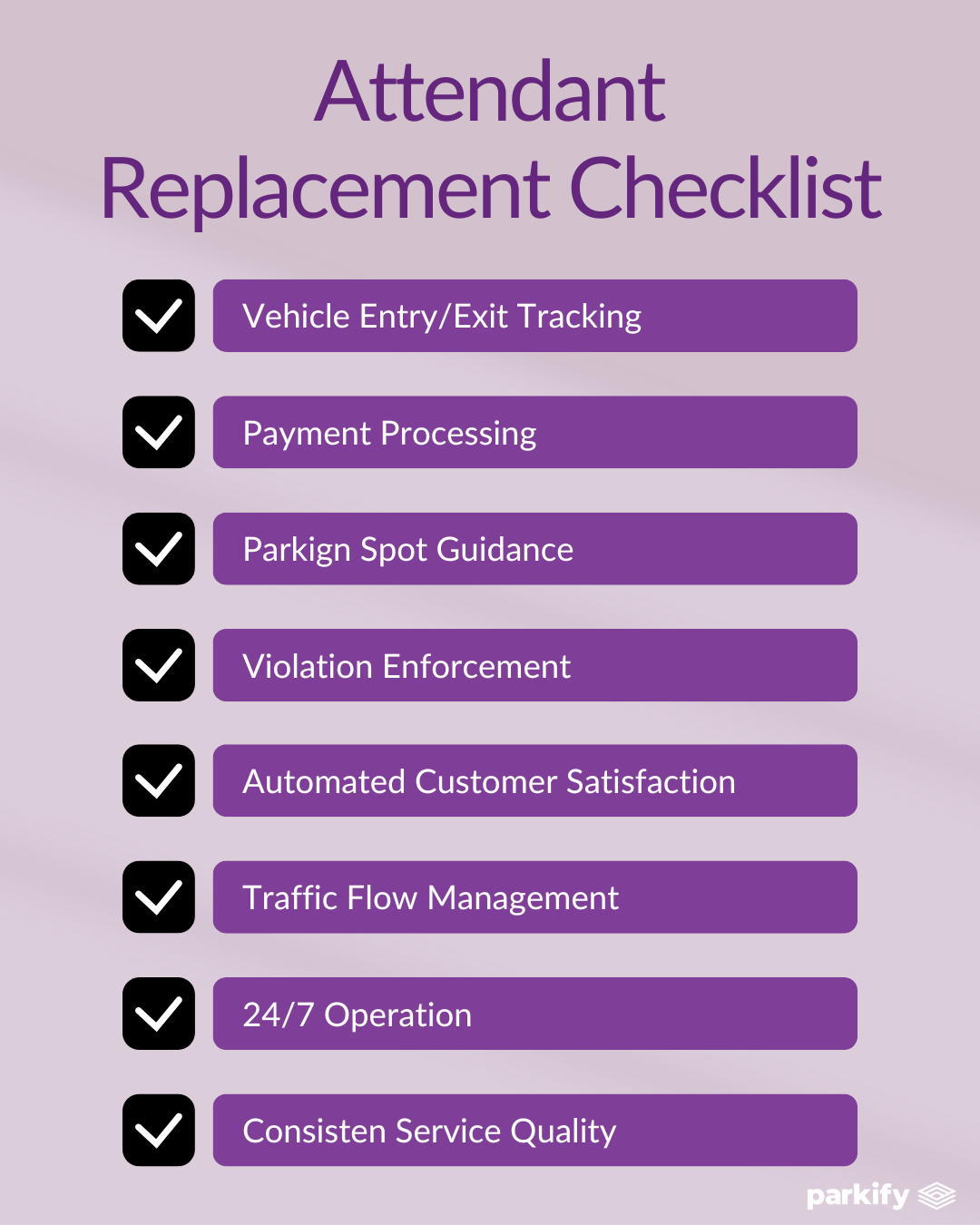
Today’s automated parking software does everything attendants did, plus tracking and optimization, at a fraction of the cost.
The question isn’t whether software can replace parking attendants. It’s why you’re still paying for manual labor when automation works better.
Ready to eliminate parking attendant costs and complexity? Contact Parkify for a free consultation and discover how automated software simplifies parking operations for guests, customers, and property managers.