Parking lot maintenance costs extend far beyond asphalt and pavement. For most commercial property owners, the real budget drain comes from aging equipment: pay stations that jam, gate arms that break, sensors that malfunction, and access control systems that need constant attention.
Every service call, every replacement part, and every hour of downtime chips away at your bottom line. And when equipment fails during peak hours, the frustration spreads to tenants and visitors who can’t enter or exit your facility.
Modern parking technology offers a different approach. By replacing mechanical infrastructure with cloud-based software and AI-powered systems, property managers can eliminate the maintenance burden that comes with outdated equipment. The result is lower costs, fewer headaches, and a parking operation that actually runs itself.
The Hidden Maintenance Burden of Traditional Parking Equipment
Traditional parking systems rely on physical hardware at every entry and exit point. Each piece of equipment represents ongoing maintenance costs and potential failure points that affect your property value and tenant satisfaction.
Pay Stations Break Down Constantly
Mechanical pay stations are maintenance nightmares. Card readers wear out, bill acceptors jam, coin mechanisms fail, and screens crack. Each breakdown requires a technician visit, and parts often need to be ordered and replaced.
In the meantime, your facility either operates without payment collection or creates bottlenecks that disrupt traffic flow as staff manually process transactions. For property managers, pay station maintenance becomes a recurring line item that never seems to shrink.
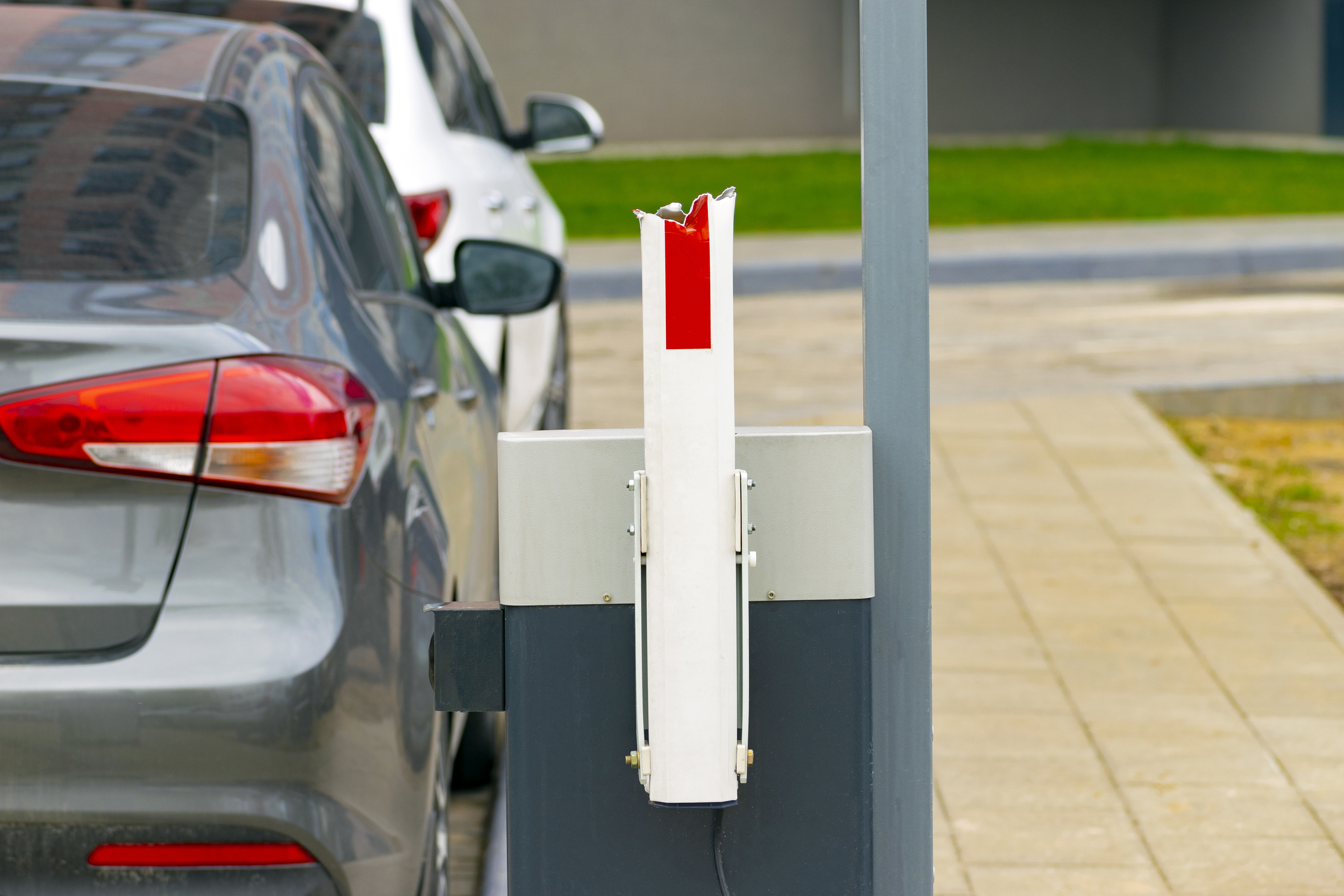
Gate Systems Require Endless Repairs
Gate arms, motors, and control boards take a beating from constant use. A busy parking facility might cycle gates hundreds of times per day, and that mechanical stress leads to inevitable failures:
- Gate arms that snap or won’t raise
- Motors that burn out from overuse
- Control boards that short-circuit or malfunction
- Hinges and mounting hardware that loosen over time
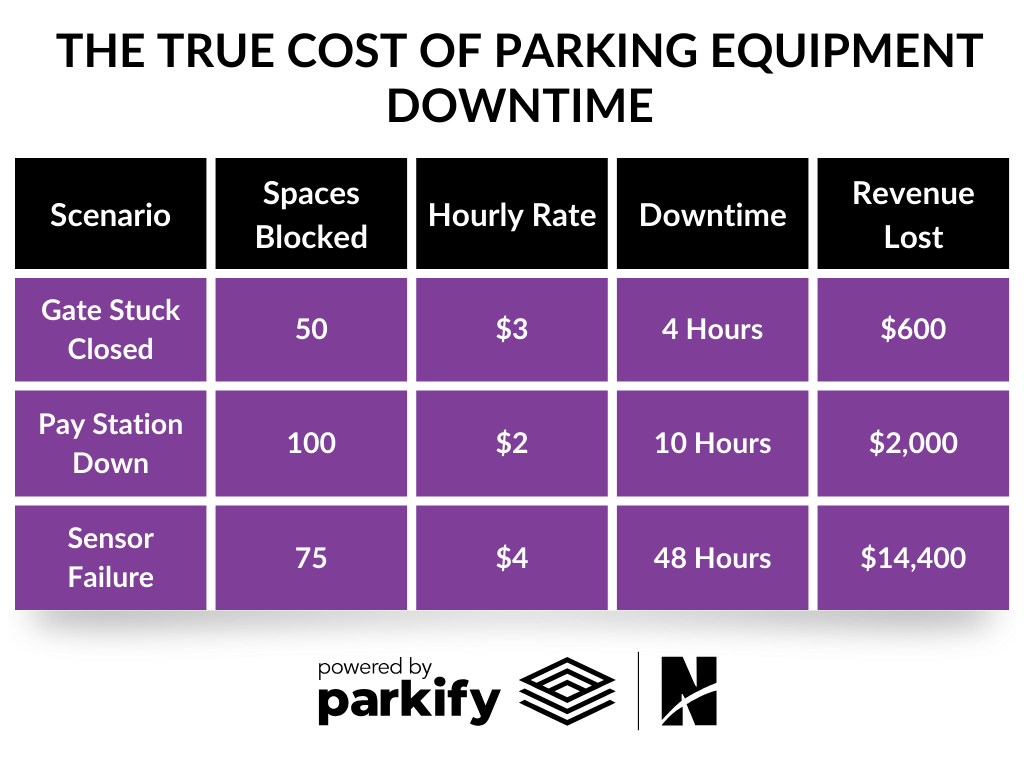
Each parking lot repair means coordinating with technicians, waiting for parts, and dealing with frustrated visitors who can’t access your parking spaces. For any business owner, these disruptions translate directly to lost revenue and tenant complaints.
Sensors and Loops Fail Without Warning
In-ground loop detectors and vehicle sensors are critical to gate operation, but they’re also prone to failure. Loops crack and lose connectivity. Sensors drift out of alignment. Wiring degrades over time, especially in climates with freeze-thaw cycles.
When sensors fail, gates either stay open (creating security issues and safety hazards) or stay closed (blocking legitimate traffic). Diagnosing sensor problems often requires specialized technicians, and major repairs can mean cutting into your pavement to access buried wiring.
Ticket Dispensers Add Another Layer of Problems
Properties using ticket-based systems face additional maintenance headaches. Ticket stock runs out. Thermal printers jam. Dispensing mechanisms fail. And every ticket represents a physical item that can be lost, damaged, or counterfeited.
The labor involved in restocking, troubleshooting, and maintaining ticket dispensers adds up quickly, especially for facilities with multiple entry points across large commercial property portfolios.
How Modern Parking Technology Eliminates Equipment Maintenance
Parkify takes a fundamentally different approach to parking management. Instead of relying on mechanical equipment at every access point, the platform uses AI, cloud-based software, and license plate recognition to manage your facility with minimal physical infrastructure.
License Plate Recognition Replaces Tickets and Access Cards
AI-powered cameras identify vehicles automatically as they enter and exit. There are no tickets to dispense, no access cards to validate, and no physical credentials to manage.
The system recognizes authorized vehicles instantly and tracks every entry and exit without mechanical intervention. For property managers, this means eliminating ticket dispensers, card readers, and the regular parking lot maintenance that comes with them.
QR Code Payments Replace Pay Stations
Scan-to-pay technology moves payment processing to visitors’ phones. Guests scan a posted QR code, enter their license plate, and complete payment in seconds. No app download required.
This approach eliminates pay stations entirely:
- No more jammed bill acceptors or broken card readers
- No more cracked screens requiring replacement
- No more technician visits to troubleshoot payment equipment
- No more cash collection and reconciliation headaches
The transaction happens in the cloud, and the system links payment to the vehicle automatically.
Cloud-Based Software Replaces Local Controllers
Traditional parking systems rely on local control boards and on-site servers that require regular maintenance services and occasional replacement. Cloud-based parking software moves this intelligence off-site.
Updates happen automatically. Monitoring runs 24/7 without on-site equipment. And when adjustments are needed, property managers make changes through an online dashboard rather than calling a technician.
Simplified Gate Infrastructure
While Parkify can work with existing gate systems, the platform dramatically reduces the complexity of gate operations. License plate recognition handles vehicle identification, eliminating the need for loop detectors and proximity sensors at every lane.
When gates do need attention, the simplified infrastructure means fewer components that can fail and faster diagnosis when problems occur.
The Financial Impact of Eliminating Equipment Maintenance
Property owners evaluating parking technology should consider the full cost of their current equipment maintenance. BOMA International emphasizes the importance of reducing operating costs to improve property performance, and parking equipment represents a significant opportunity for real estate professionals.
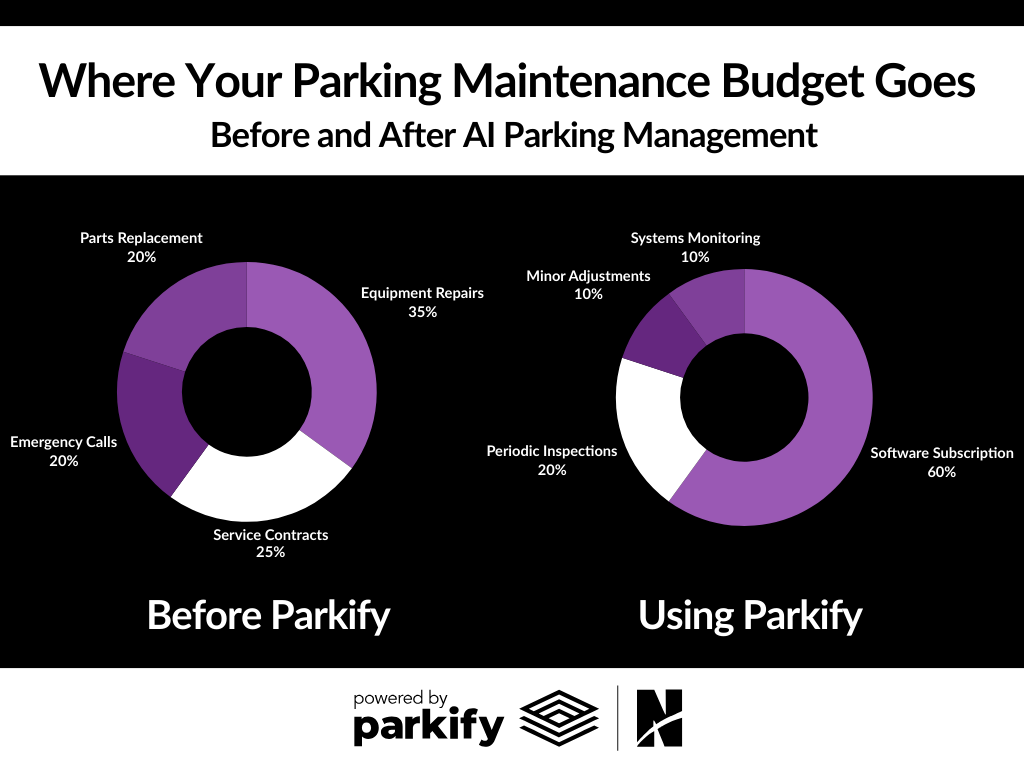
- No more service contracts. Traditional parking equipment requires ongoing service agreements that cost thousands annually. Cloud-based systems eliminate these recurring expenses.
- No parts and repair costs. Gate motors, pay station components, and sensor replacements add up. When you remove the equipment, you remove the repair bills.
- No emergency service calls. Equipment failures during evenings and weekends often require premium-rate emergency service. Automated systems monitored remotely catch issues before they become emergencies.
- No equipment replacement cycles. Pay stations, gate controllers, and access systems eventually need complete replacement. Eliminating this equipment eliminates those capital expenses.
- Reduced downtime costs. Every hour your parking facility operates with broken equipment is an hour of lost revenue or frustrated visitors. Reliable cloud-based systems keep your operation running.
The International Parking & Mobility Institute has documented the growing shift toward technology-driven parking management, with reduced maintenance cited as a primary driver for property owners seeking quality service without the operational burden.
What Modern Parking Management Actually Looks Like
The difference between traditional and modern parking operations becomes clear when you compare day-to-day management.
Traditional operations require property managers to coordinate with multiple vendors, respond to equipment failures, schedule preventive maintenance, and budget for ongoing repairs. Staff time goes toward troubleshooting rather than improving operations or addressing safety hazards.
Modern operations run automatically. The system monitors itself, processes payments without mechanical equipment, and alerts you only when attention is actually needed. Property managers check a dashboard rather than inspecting equipment, and traffic flow stays consistent without manual intervention.
This shift frees up time and budget for improvements that actually benefit your property rather than simply keeping aging equipment functional.
Making the Transition
Switching from equipment-heavy parking operations to a modern platform is simpler than most business owners expect.
Assessment
Parkify’s team evaluates your current infrastructure to understand what equipment can be eliminated and what can be integrated. Many properties find they can remove pay stations, ticket dispensers, and access card systems entirely from their parking spaces.
Installation
Professional installation typically takes about 30 days. License plate recognition cameras go in at entry and exit points, QR code signage replaces pay stations, and the cloud-based platform comes online. Your facility continues operating throughout the transition with exceptional service from the implementation team.
Launch
Once live, the system handles vehicle identification, payment processing, and enforcement automatically. Property managers access everything through an online dashboard, and remote support handles any issues that arise. The result is a parking operation that protects your property value while eliminating the maintenance burden of outdated infrastructure.

Your Parking Equipment Is Costing You More Than You Think
Every broken gate arm, jammed pay station, and failed sensor represents money leaving your commercial property. The maintenance burden of traditional parking equipment never ends because mechanical systems always break down eventually, often requiring major repairs that blow through maintenance budgets.
Modern parking technology offers an exit from this cycle. By replacing physical equipment with AI-powered software, property managers eliminate the maintenance headaches that drain budgets and consume staff time. The technology delivers quality service to visitors while reducing the operational complexity that comes with legacy parking systems.
Ready to see what parking management looks like without constant equipment repairs? Contact Parkify for a free strategy session and discover how much you could save by leaving outdated parking infrastructure behind.